Last updated November 17, 2026





Free written scope consultation - allowances, timeline, and change-order rules on paper before a single trade is scheduled
How to Hire a Construction Contractor in Homestead: A Step-by-Step Guide
Florida’s Construction Industry Licensing Board runs a free public license lookup, and it takes about ninety seconds to use. Yet in our experience, fewer than one in ten homeowners ever opens it before signing a contract. In Homestead, that shortcut gets expensive fast. After every storm season, out-of-state crews roll in with temporary licenses, cash deposits, and out-of-county phone numbers, and the homeowners who skip the lookup are the ones who pay for it twice. This guide gives you a repeatable, documented process for vetting anyone you let onto your property in Homestead – the license check, the insurance certificates, the change-order paper trail, and a payment schedule that keeps you protected at every phase.
Quick Answer
To hire a construction contractor in Homestead, verify their Florida DBPR license status is active (not delinquent), collect current general liability and workers’ comp certificates, insist on a written contract with written change orders, and tie payments to completed phases rather than to a large upfront deposit. A legitimate Homestead contractor will hand over all of it without flinching, pull permits on every eligible job, and answer the phone after the check clears. If any of those four steps gets pushback, you’ve found your answer.
Styles & brands we work with
- Kitchen remodeling
- Bathroom remodeling
- Home additions & ADU
- Roofing
- Windows & doors
- Driveway & pavers
- Fence
Table of Contents
- Step 1: Run the Florida DBPR License Check
- Step 2: Verify General Liability and Workers’ Comp
- Step 3: Get the Entire Scope in Writing
- Step 4: Confirm Who Pulls the Permits
- Step 5: Understand How Change Orders Actually Work
- Step 6: Structure Payments That Protect You
- Red Flags Specific to the Homestead Market
- What a Site Visit Should Look Like
Step 1: Run the Florida DBPR License Check
The Florida Department of Business and Professional Regulation licenses contractors through the Construction Industry Licensing Board, and the lookup lives at myfloridalicense.com. It’s free, it’s public, and it’s the single most useful ninety seconds you’ll spend on your project. Search by the contractor’s name, license number, or company name. What you’re looking for is the status field.
An “active” license means the contractor is current on state requirements and legally cleared to contract work in Florida. A “delinquent” license means they’ve let status lapse – often unpaid fees or expired continuing education – and while they may still be doing work, the state will not back you if the job goes sideways. A “null and void” status is the red flag; it means the license has been revoked or terminated, and anyone operating under one is contracting without a valid license. That’s a phone call you don’t want to make after the deposit clears.
Why it matters in Homestead specifically: after a named storm or a heavy hurricane season, temporary licenses get issued and contractors come in from outside the county to absorb the demand. Some are legitimate. Many are not. The DBPR lookup tells you the current status, the license type (general, building, roofing, specialty), and whether any disciplinary actions are on record. Look those up before you meet them. If they flake on the lookup or tell you the license “isn’t in the system yet,” walk away. We’ve watched customers find out after the fact that the “licensed” contractor who took a deposit had a null and void status the entire time. Every job Barrett & Sons Construction takes in Homestead is backed by a published, verifiable license number – and we tell customers to look it up before they sign anything. You can start from our Barrett & Sons Construction Homestead home page to see who we are before you ever call.
Step 2: Verify General Liability and Workers’ Comp
A license doesn’t cover damage. Insurance does. Ask every contractor you’re considering for two separate certificates of insurance: general liability and workers’ compensation. They are not the same policy, and they protect you in completely different ways.
- General liability covers damage to your property or someone else’s during the job. If a crew member backs a trailer into your garage or a roofing panel drops and dents your car, general liability pays. Without it, you’re filing with your own homeowner’s policy – and eating the deductible and the rate bump.
- Workers’ comp covers the crew if someone gets hurt on your property. If a worker falls off your roof and the contractor has no workers’ comp, that worker’s medical bills can land on you as the property owner. This is the single most commonly skipped certificate and the most expensive one to skip.
How to verify the certificates are current, not expired: the certificate must be issued in the contractor’s legal name, show the policy effective dates that cover your project window, and list a certificate holder’s phone number you can call to confirm status. We recommend calling the insurance agency directly. A certificate dated a year and a half ago with no active policy behind it is not proof of anything. It’s a PDF. Ask for a fresh certificate issued within the last thirty days.
One more note specific to South Florida: if the contractor will be performing roofing, structural, or major additions work, the general liability limits need to be real numbers – ask about the aggregate limit, not just the per-occurrence. A crew carrying a $300,000 limit on a $120,000 home addition is a thin margin.
Step 3: Get the Entire Scope in Writing
A verbal scope is a wish list. A written scope is a contract. Every legitimate proposal should include line-item detail on materials, brands, dimensions, allowances, exclusions, and the timeline. If a contractor quotes a kitchen remodel in Homestead with one lump number and no breakdown, you have no way to measure what’s being delivered against what you’re paying for.
In our experience across hundreds of jobs, the split that causes 90% of disputes is the “allowance.” An allowance is a placeholder number for a material you haven’t finalized – tile, cabinets, fixtures. And an allowance that isn’t on paper is a surprise waiting for a date. If the proposal says “cabinets: $4,000 allowance” and you later fall in love with a KraftMaid or Wellborn line that runs $7,500 installed, you’re on the hook for the $3,500 difference. If the proposal lists the allowance, the brand, and the upcharge mechanism, you decide before work starts, not after.
Ask for the scope in this format before signing anything:
- Line-item materials by brand and model – not “premium cabinets,” but the actual brand line and model grade.
- Allowances in writing – with the upcharge mechanism documented if you exceed them.
- Exclusions in writing – what the contractor is NOT doing is as important as what they are.
- Timeline with named phases – rough framing, mechanical rough-ins, inspections, finishes, punch list.
- Payment schedule tied to phases – more on that below.
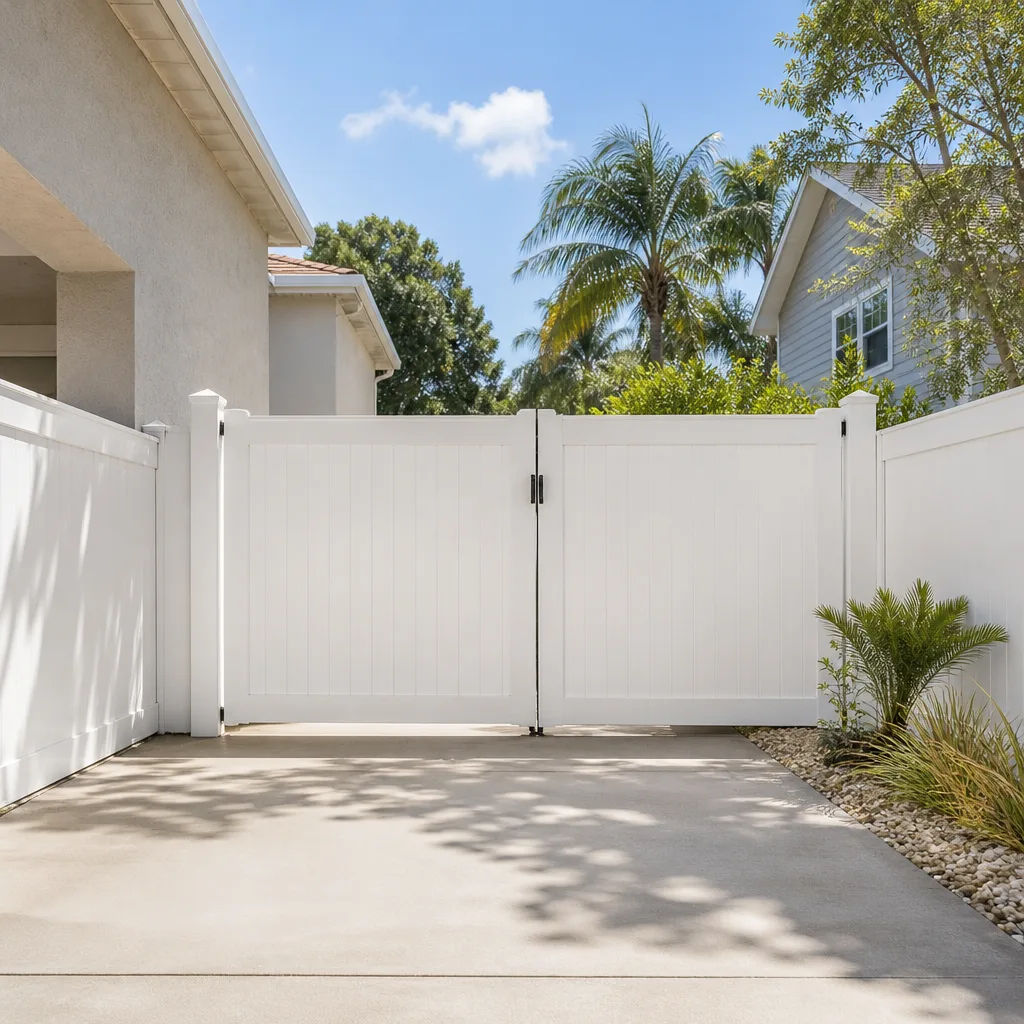
If you’re pricing out a driveway, fence, or addition, get multiple written quotes using the same format so you can compare apples to apples. Our guides on Driveway & Pavers in Homestead and Fence Installation in Homestead walk through what those scopes should include layer by layer.
Step 4: Confirm Who Pulls the Permits
The single most common lie in the Homestead market is “permits are optional for this job.” They’re not. Almost every structural, electrical, plumbing, and mechanical scope in Miami-Dade County requires a permit, and the permits exist to protect you. The permit inspector works for you, not for the contractor. That’s why the honest ones like having them on site.
Ask: “Are you pulling the permit, and who’s the qualifying agent?” The permit has to be pulled under a licensed qualifier, and the name on the permit should match the name on your contract. If a contractor tells you they’ll have “a friend pull it” or that they’ll “handle the permit under a different license,” that’s a red flag. Unpermitted work in Homestead creates real problems down the line – any future insurance claim on an unpermitted roof or addition can get denied, and the county can require a retroactive permit with engineering documentation that costs more than the original job.
After the permit is pulled, every inspection needs to be signed and closed out. A final inspection sign-off is the last line of defense for you. It means the county verified the work against code before you ever handed over the final payment. We tell every customer the same thing: the inspector is your best friend on the job. Ask for the permit number at the start and check the county’s online portal to track inspections along the way.
Step 5: Understand How Change Orders Actually Work
The verbal “we’ll figure it out” is how surprise invoices get born. A legitimate change-order process has a specific shape: any change to the scope, price, or timeline gets written, priced, and signed before the work proceeds. Not after. Not “we’ll settle up at the end.”
A real change order includes:
- The specific change in plain language – what’s being added, removed, or substituted.
- The dollar amount, itemized – not “add $2,400 for materials.”
- The schedule impact – how many days the change moves the completion date.
- A signature line for the homeowner and a date.
We tell every customer to ask one specific question during the proposal phase: “What’s your change-order process, and can I see a sample?” If the answer is anything other than “everything gets written and priced before any work moves,” you’re looking at a contractor who plans to argue about the bill at the end. The 90-Day Done Right Promise we put on every contract is built on the same premise: no surprise invoices, no mystery line items, no “we’ll work it out.”
Keep every change order in a folder – paper and photo both. If there’s ever a dispute, that folder is your protection, and a written contract with a documented change log is the difference between a conversation and a lawsuit.
Step 6: Structure Payments That Protect You
A fair payment schedule is phased against completed work, not against the calendar. A large upfront deposit – 50% or more before any materials hit the ground – is the single biggest reason Homestead homeowners get burned. It ties your money to their incentive. Once the deposit clears, the urgency to finish drops.
A payment schedule that works for both sides:
- Small mobilization deposit – enough to cover initial materials or permit fees, not enough to fund the entire job.
- Payment at material delivery – when branded materials show up on site, not before.
- Payment at rough-in and framing completion – after the first inspection passes.
- Payment at finishes – cabinetry, flooring, paint installed and inspected.
- Final payment at punch list sign-off – held until every item on the walkthrough list is closed out.
Ask for a lien waiver with every payment. A lien waiver says the contractor and their subs have been paid through that phase, and it protects you from a subcontractor lien on your property if the general contractor doesn’t pay their crew. Any contractor who won’t provide lien waivers on request is one you should walk away from.
And a note on cash discounts: if a contractor offers a steep discount for cash with no paperwork, that’s a deal that disappears when the project goes wrong. You want the paper trail.
Red Flags Specific to the Homestead Market
Homestead has some market-specific patterns we’ve watched play out for years. The warning signs are consistent.
- Out-of-county addresses on the contract – a Broward, Palm Beach, or out-of-state address on a Homestead job means the drive-by inspection on Tuesday is not really going to happen. A company that lives twenty minutes away has a completely different incentive to make it right.
- No local permit history – ask for the permit number on two previous jobs in the county. A legitimate Homestead contractor has a paper trail you can verify. If they can’t produce a single permit number, they’ve been working under the radar.
- Quotes with no site visit – HVAC, roofing, additions, and pavers all require a real look at the property. A phone quote on a $40,000 addition is not a quote; it’s a guess with a contract attached.
- Temporary license without a qualifier listed – in a post-storm market, temporary licenses are issued to out-of-state contractors. Verify that a Florida-qualified agent is on the job, not just a temporary permit.
- Pressure to sign today for a discount – legitimate contractors don’t need a same-day signature. A price that vanishes at 5 p.m. was a price that was going to change at 5 p.m. anyway.
- Verbal-only promises on the change-order process – “don’t worry, we’ll figure it out” is the beginning of the biggest line on your final invoice.
What a Site Visit Should Look Like
A real site visit takes 45 to 90 minutes depending on the job. If the contractor is in and out in fifteen with a clipboard and a handshake, you didn’t get a site visit – you got a sales call. Here’s what a legitimate walkthrough for a Homestead project looks like.
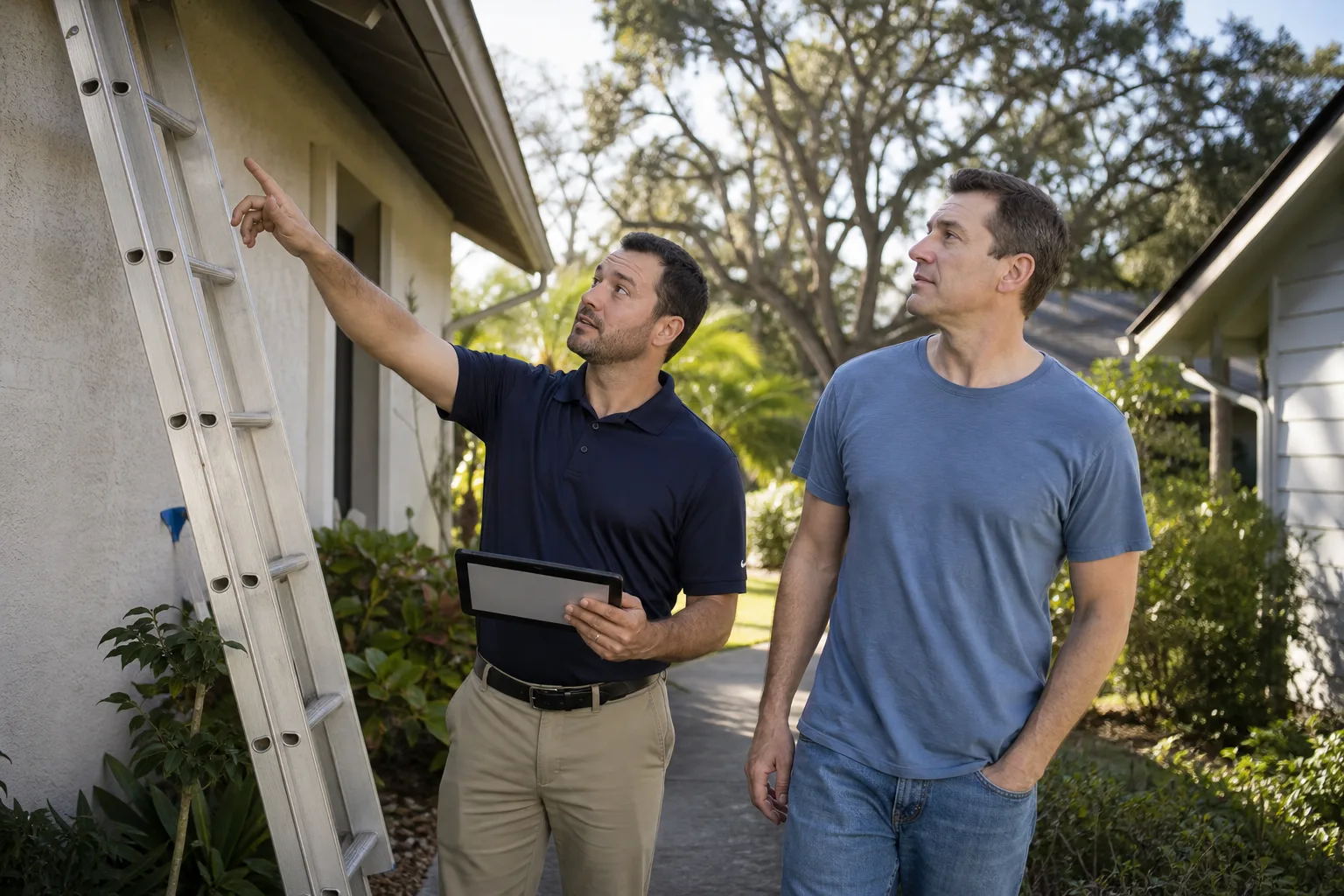
They should measure the actual space. They should look at the roof pitch, the fence line, the driveway slope, the existing electrical panel, the attic access, and the soil conditions. In Homestead, the soil is often sandy fill over limestone, which affects footing and drainage on pavers and additions – a contractor who doesn’t mention the soil conditions or the elevation has never done the work in this county. They should ask about your neighbors’ fences and your HOA rules if you have one. They should ask what your plan is if the county inspector flags something mid-build. A real site visit ends with a written scope, not a same-day number.
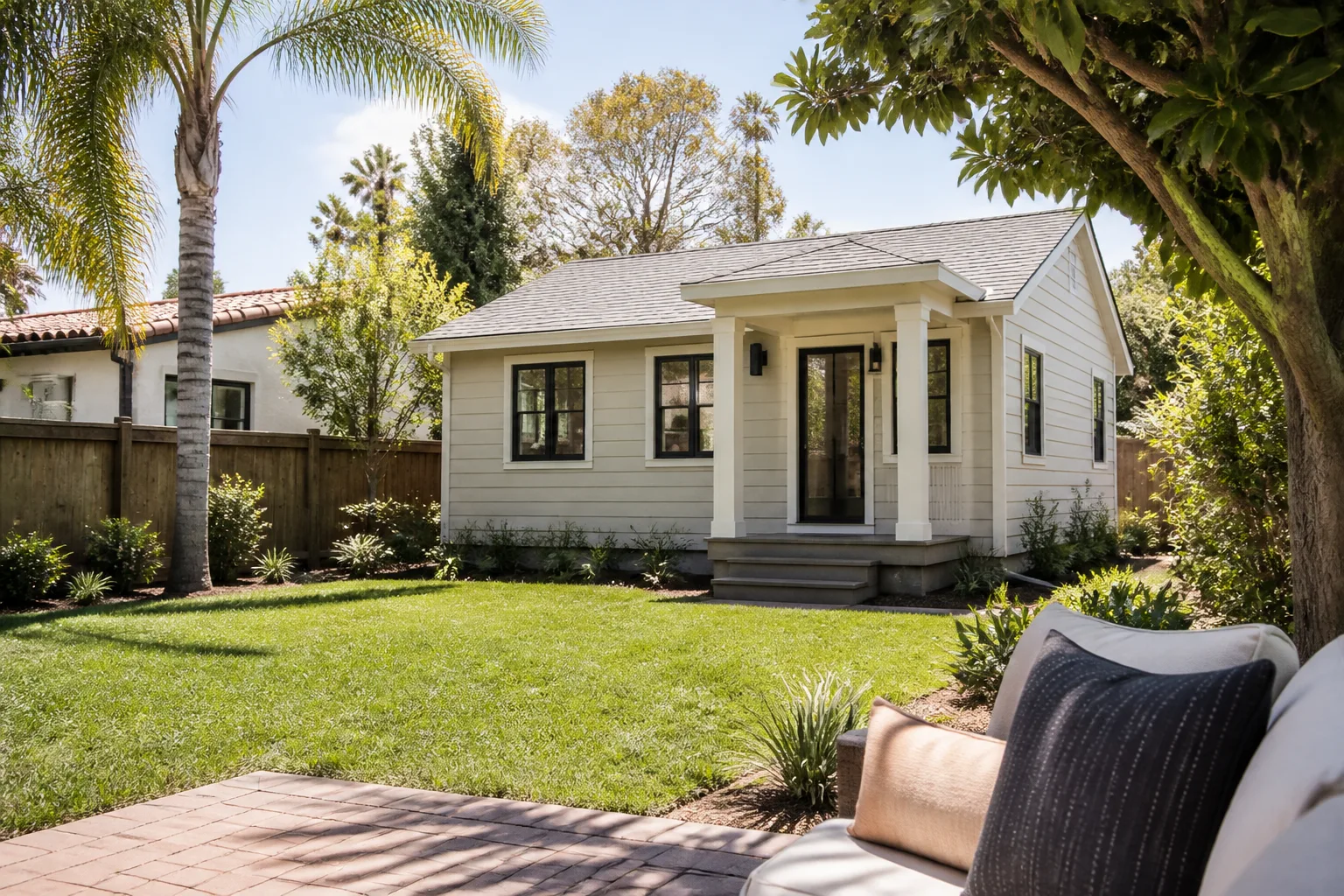
If you’re considering an addition, the site visit should include a direct conversation about the permit path, the design point where engineering is required, and the realistic timeline for inspection phases. Our team at Home Additions & ADU in Homestead walks through exactly how that path looks in Miami-Dade County for a typical addition.
Common Mistakes to Avoid
- Signing before running the DBPR lookup. Ninety seconds of typing protects you from the largest single class of Homestead contractor disaster. If the status says delinquent or null and void, don’t sign.
- Hiring on price alone. The cheapest bid on a Homestead roof or kitchen remodel is almost always missing half the scope. When the missing half gets added back via change orders, the “cheapest” bid becomes the most expensive one on the street.
- Paying a 50% deposit without a written scope. A large deposit before materials arrive is money you’ve handed to a stranger with no documentation and no lien waiver. Phase payments instead.
- Skipping the second-opinion step. Every homeowner should get a second written estimate. If the two estimates are shaped completely differently – one itemized, one a single number – the itemized one is the one that tells you what you’re buying.
- Accepting a verbal “we’ll handle the permit.” Ask for the permit number in writing and track it on the county portal. Handshake permit promises have a habit of disappearing when the county catches up.
- Letting the final payment go out before the punch list. Hold the final 10-15% until every item is signed off. That’s not distrust; it’s the industry-standard incentive to close out the small stuff.
- Forgetting the 90-day warranty conversation. Ask for the written warranty that comes with the job. If a contractor won’t put a callback guarantee on paper, the warranty you’re counting on is a story.
See the difference
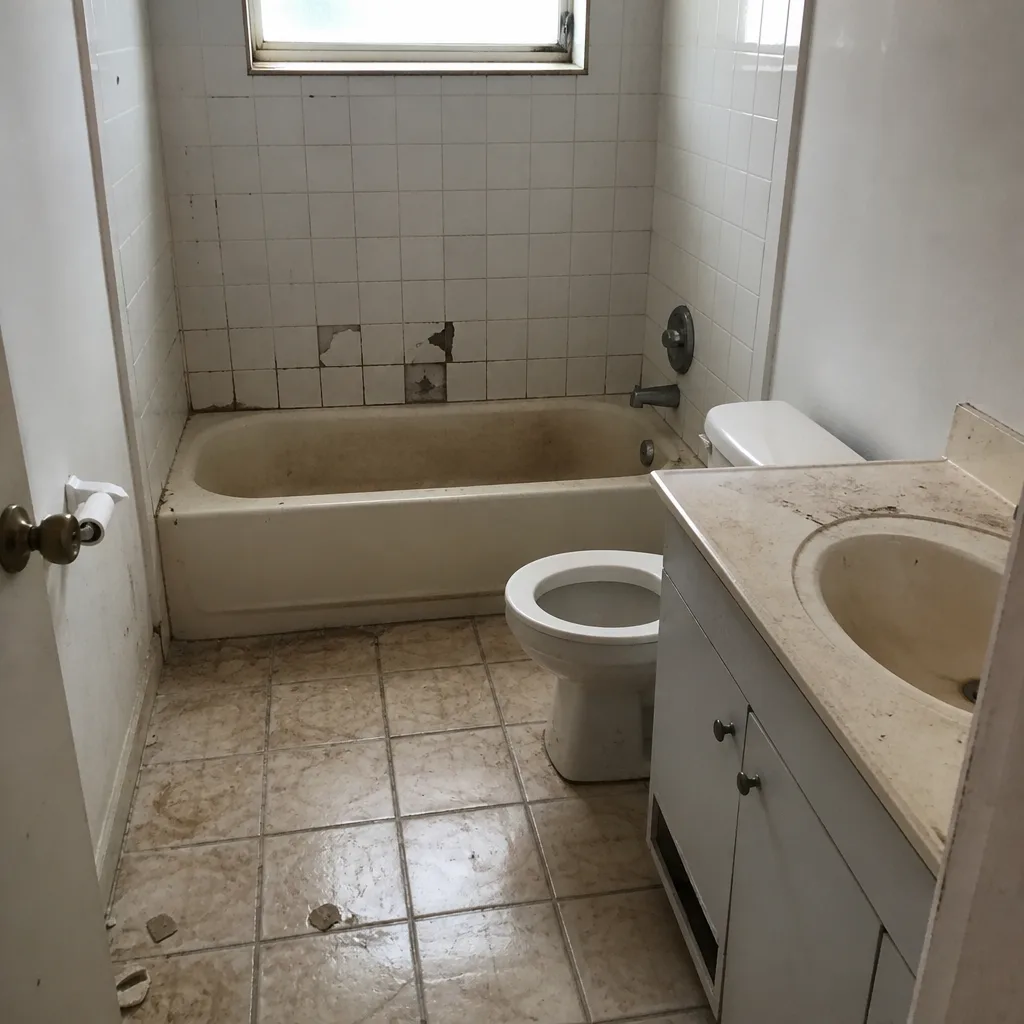 Before
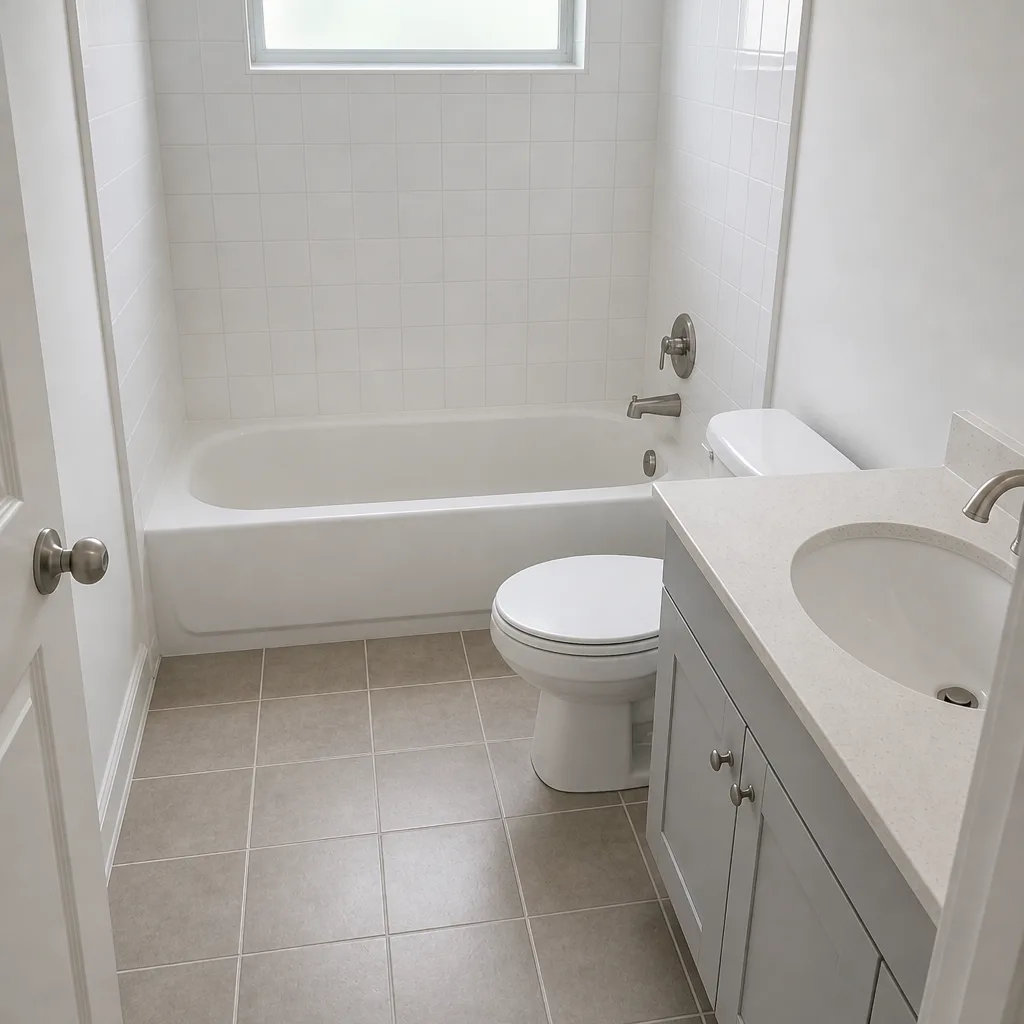 After
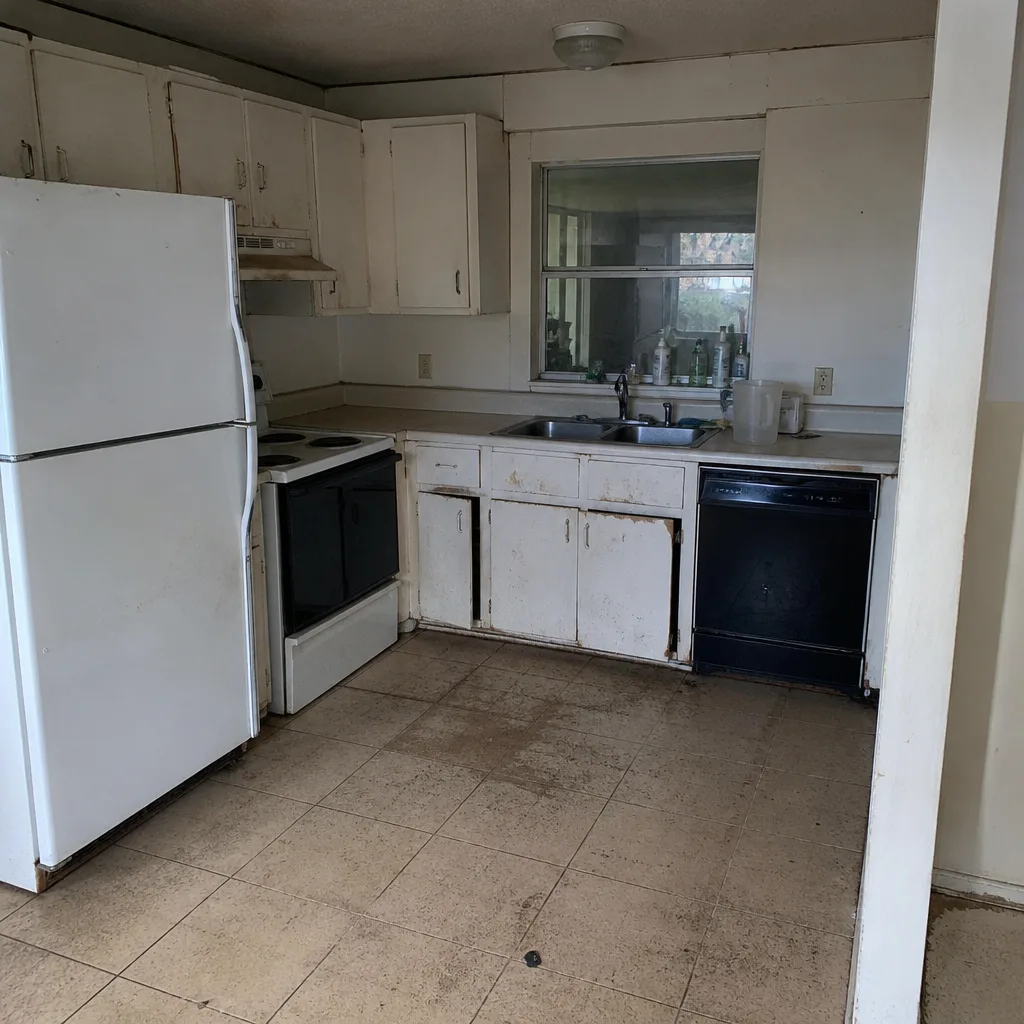 Before
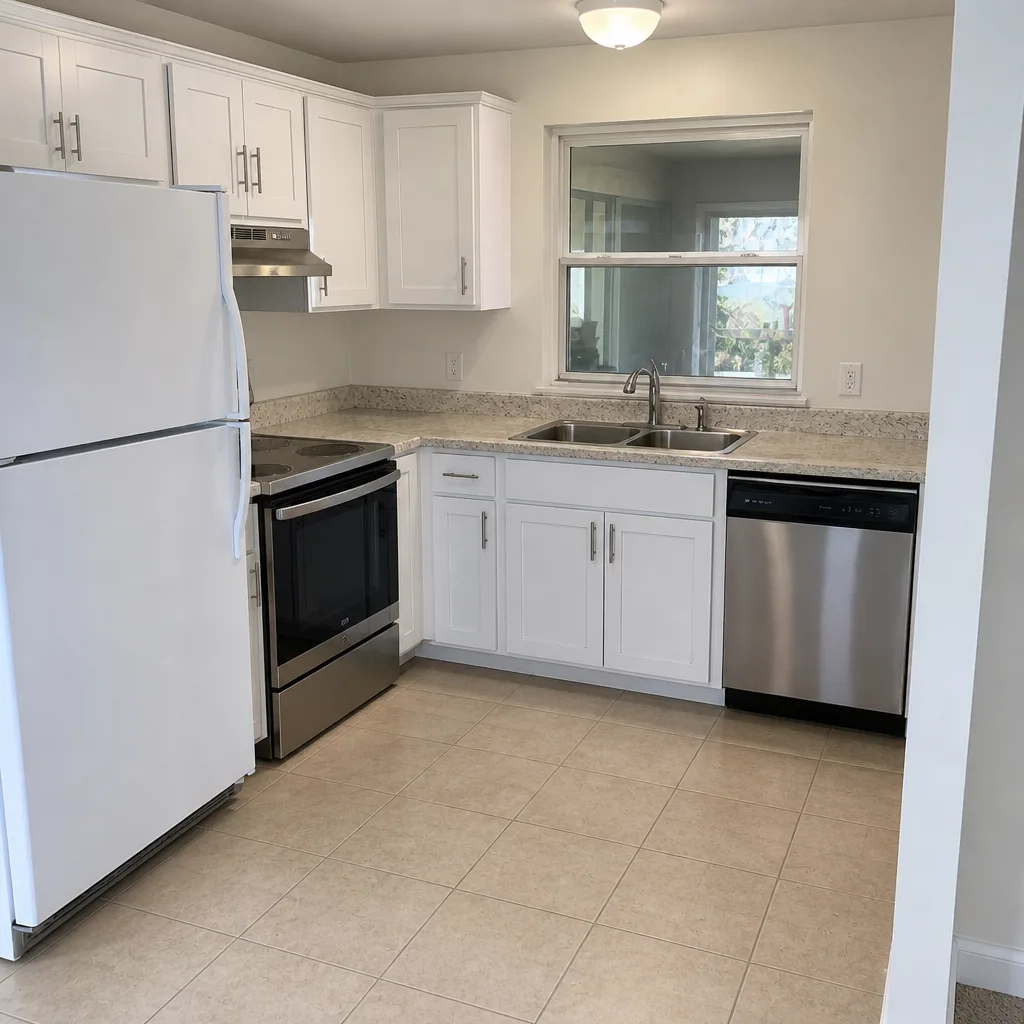 After
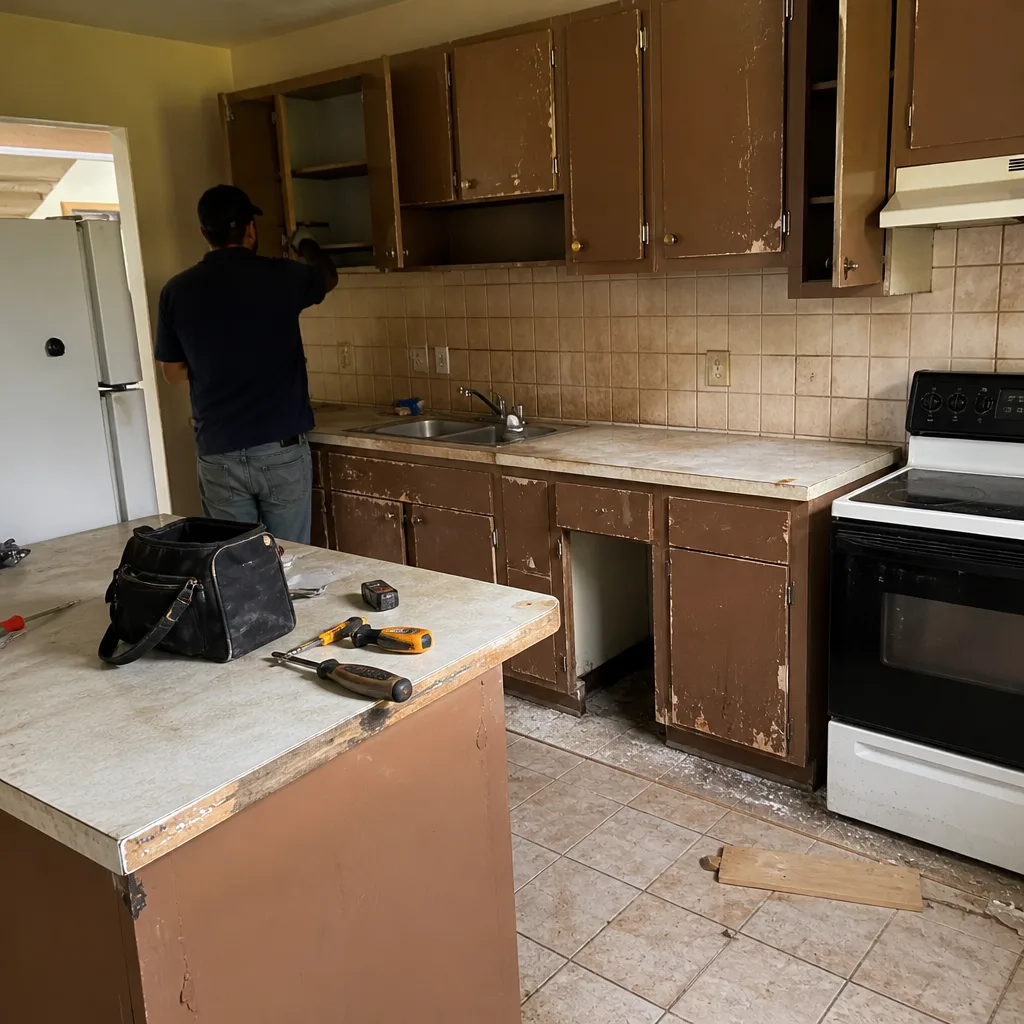 Before
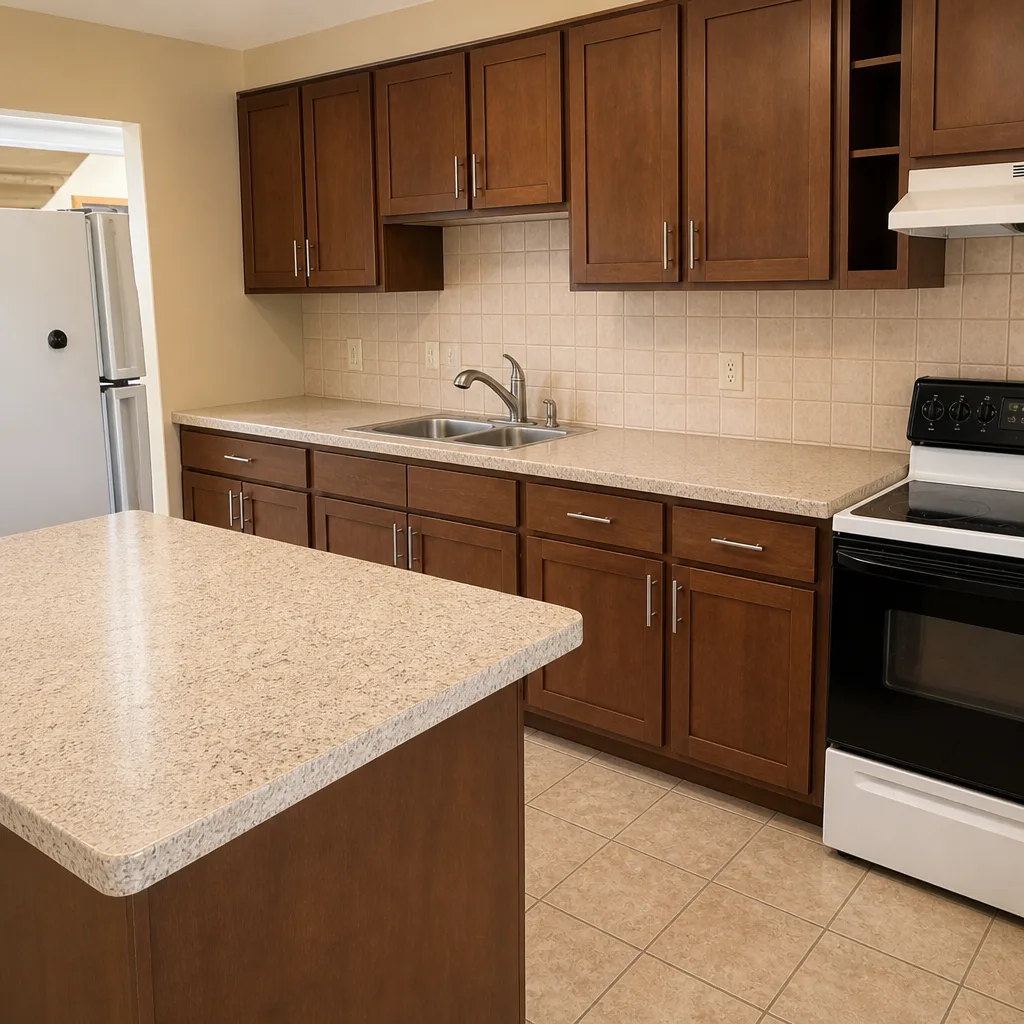 After
When to Call a Professional
Some jobs in Homestead are cosmetic and manageable as a weekend project – a fresh coat of paint, hardware swaps, minor landscaping cleanup. Others need a licensed professional, full stop. Structural work, roofing, electrical panel changes, gas line work, and any addition over a certain square footage all require licensed work and permits. So does anything that touches the building envelope in a wind zone, which in Miami-Dade County means essentially every roof, window, and door replacement. If your project requires a permit, requires an inspection, or involves the electrical system or structural loads, hire it out to someone licensed and insured. That’s not just a recommendation – unpermitted work can void your insurance coverage and create a title problem when you sell.
Barrett & Sons Construction Homestead offers free estimates in Homestead – call (866) 344-6796. We bring a written scope, a written change-order process, and a written 90-Day Done Right Promise on every job.
Frequently Asked Questions
There’s no separate “hire a contractor” fee in Homestead, but the pricing structure a contractor uses is the thing to watch. Legitimate contractors quote projects as line-item scopes based on materials, labor, permits, and inspection phases. If you’re comparing bids, compare the scope detail, not just the bottom number, because the cheapest bid is often the one missing half the work. Call (866) 344-6796 for a free written estimate – we quote line-items, not lump sums.
Yes, for nearly every structural, roofing, electrical, plumbing, and mechanical scope in Miami-Dade County. Permits aren’t optional, and any contractor who tells you otherwise is telling you something about themselves. Ask for the permit number in writing before materials are delivered, and track the inspections through the county portal. The permit inspector works for you.
Active means the contractor is current on state requirements and legally cleared to contract work in Florida. Delinquent means the license has lapsed on fees or continuing education – they may still be operating, but the state won’t stand behind you. Null and void means the license is revoked or terminated. Check status on the DBPR lookup before you sign anything.
Ask for a fresh certificate of insurance – general liability and workers’ comp – issued within the last thirty days, in the contractor’s legal name, listing an agency phone number you can call directly to confirm the policy is active for your project window. A certificate with no active policy behind it is just a PDF. If they can’t produce one, don’t hire them.
A fair deposit covers initial mobilization, materials, and permit fees – it should not fund the entire job. Large deposits over 50% before any work starts are the most common reason homeowners get burned. Tie the rest of the payment schedule to completed phases and signed inspections, hold the final 10-15% until the punch list is closed, and get a lien waiver with every payment.
A legitimate change order is written, itemized, priced, and signed before the work proceeds. It names the change in plain language, lists the dollar amount with line-item detail, and states the schedule impact. If a contractor promises to “figure it out at the end,” that’s a promise to argue about the final invoice. Written change orders, before any scope change touches the job – no exceptions.
The Bottom Line
Hiring a contractor in Homestead comes down to four verifiable facts: a current DBPR license, real general liability and workers’ comp certificates, a written scope with written change orders, and a phased payment schedule with lien waivers. Ask every contractor you consider to hand over all four before signing anything. The ones who hand them over easily are the ones who’ve done it a hundred times. The ones who push back are telling you what the rest of the job will feel like. If you want to skip the guesswork, call Barrett & Sons Construction Homestead at (866) 344-6796 for a free estimate – and ask us for the license number. We’ll hand it over before you ask.
Written by the team at Barrett & Sons Construction Homestead.