Last updated November 17, 2026





Free written scope consultation - allowances, timeline, and change-order rules on paper before a single trade is scheduled
Fence Installation Maintenance Schedule: What to Do and When
Here’s the part nobody tells you at the fence reveal: a fence that looked fine in April can have post-base corrosion that quietly cuts its wind rating by September. The rail still hangs straight. The gate still latches. Then a named storm rolls off Biscayne Bay and the whole run leans like it gave up. In Homestead, fence maintenance isn’t a cosmetic chore. It’s the difference between a structure rated for hurricane winds and one that only hopes to be. This guide lays out a real annual rhythm for South Florida – month by month, material by material – so your fence is still standing after the storm tests it.
Quick Answer
Fence maintenance in South Florida follows a two-part rhythm: a thorough inspection and hardware tightening in May, before hurricane season peaks, and a damage assessment after every named storm. In between, each material needs its own care – aluminum gets corrosion checks, vinyl gets mold removal and post-cap checks, wood gets sealing and rot inspection, and chain-link gets tension and coating attention. Skip the pre-season inspection and you won’t find the failure until the wind does.
Styles & brands we work with
- Kitchen remodeling
- Bathroom remodeling
- Home additions & ADU
- Roofing
- Windows & doors
- Driveway & pavers
- Fence
Table of Contents
- Why Fence Maintenance in Homestead Is Different
- The May Pre-Hurricane Season Inspection Checklist
- The Post-Storm Checklist
- Material-Specific Maintenance Calendars
- Spotting and Treating Early Corrosion
- Cleaning Mold, Algae, and Salt Without Ruining the Coating
- What Annual Tasks Protect Your Manufacturer’s Warranty
- Common Mistakes to Avoid
Why Fence Maintenance in Homestead Is Different
Most fence-care guides are written for a climate that has frost. Homestead doesn’t. We have salt air moving inland from the coast, humidity that hovers above 70 percent much of the year, and a hurricane season that runs June through November. Those three things attack a fence from different directions at once.
Salt is the sneaky one. Airborne chloride settles on aluminum and steel hardware and starts eating the coating from the smallest scratch outward. Humidity keeps surfaces damp long enough for mold and algae to take hold on vinyl and wood. And the summer sun bakes all of it, which breaks down finishes faster than northern homeowners would believe. A cedar fence that lasts fifteen years in the Carolinas might need re-sealing every two years down here.
Then there’s the wind load question. Fences in this part of Miami-Dade County have to hold up to design wind pressures that most of the country never thinks about. That’s not abstract – it means the posts, footings, and connections that carry the load from the panels down to the ground matter more than the panels themselves. We regularly see gates that swing fine in March bind up by August because a buried post has softened at the base after the wet season.
So the schedule below isn’t about keeping things pretty. It’s about checking the load path – post to rail to panel to hardware – before the season that tests it arrives.
The May Pre-Hurricane Season Inspection Checklist
Do this inspection in May, before the season’s first serious system forms. Set aside a morning, grab a flashlight, a screwdriver, and a pair of work gloves, and walk the whole run. Work from one end to the other so you don’t skip a section.
- Walk the base of every post. Push each post at shoulder height. Any wobble beyond a slight flex means the footing or the wood at grade has lost strength. That’s the single most common hidden failure we find on older Homestead fences.
- Check post-to-rail and rail-to-panel fasteners. Tighten or replace loose screws and brackets. Stainless hardware is the standard for coastal work; if you find plain steel screws that have already started to rust, swap them now rather than after a storm loosens them.
- Inspect every post base and footing for corrosion or rot. On aluminum, look for white or chalky deposits and bubbling paint near the concrete. On wood, probe with a screwdriver – if it goes in easily, the post has started to go.
- Test the gates. Open and close each one, check the hinges and latch, and look at the gate post for movement. Gates are the highest-stress point on any fence because they carry the swing load and catch the most wind.
- Clear vegetation and debris. Vines, shrubs, and piled mulch hold moisture against the fence and hide rot. Trim everything back at least a few inches.
- Look at drainage. After heavy rain, note where water pools at the base of the fence. Standing water shortens the life of any footing, wood or metal.
- Photograph the whole run. Date the photos. If you ever need to file an insurance claim, before-and-after records are worth more than your memory of how it looked.
The Post-Storm Checklist
This one applies after any named storm, and honestly after any system that drops a lot of wind and rain. Do it as soon as it’s safe to walk the yard. Don’t wait for the next dry weekend.
- Start with a wide look. Note any leaning posts, displaced panels, or gates that won’t close. Photograph everything before you touch it.
- Check the posts and footings for movement. A post that shifted in the ground is a structural problem, not a cosmetic one. If a section has pulled loose from its footing, don’t try to straighten it by force – get it assessed.
- Look for loose or missing hardware. Wind vibrates screws loose long before panels fail. Replacing a handful of fasteners now is cheaper than rebuilding a section later.
- Rinse off salt and blow-in debris. Storm surge and wind-driven salt can accelerate corrosion fast. A fresh-water rinse within a day or two makes a real difference on metal components.
- Check for water damage at the base. Pooled water after a storm can soften wood posts and undermine footings. If a post base is holding water, fix the drainage.
- Log the damage. Keep dated photos and a short written record. This is where homeowners who maintain a fence diary have an easy time with insurance, and everyone else doesn’t.
If you find structural damage – a shifted post, a section that has pulled out of the ground, a gate post that moved – that’s not a maintenance task. Call a professional. We talk more about that below.
Material-Specific Maintenance Calendars
Every fence material in South Florida has its own clock. Here’s what each one needs and when.
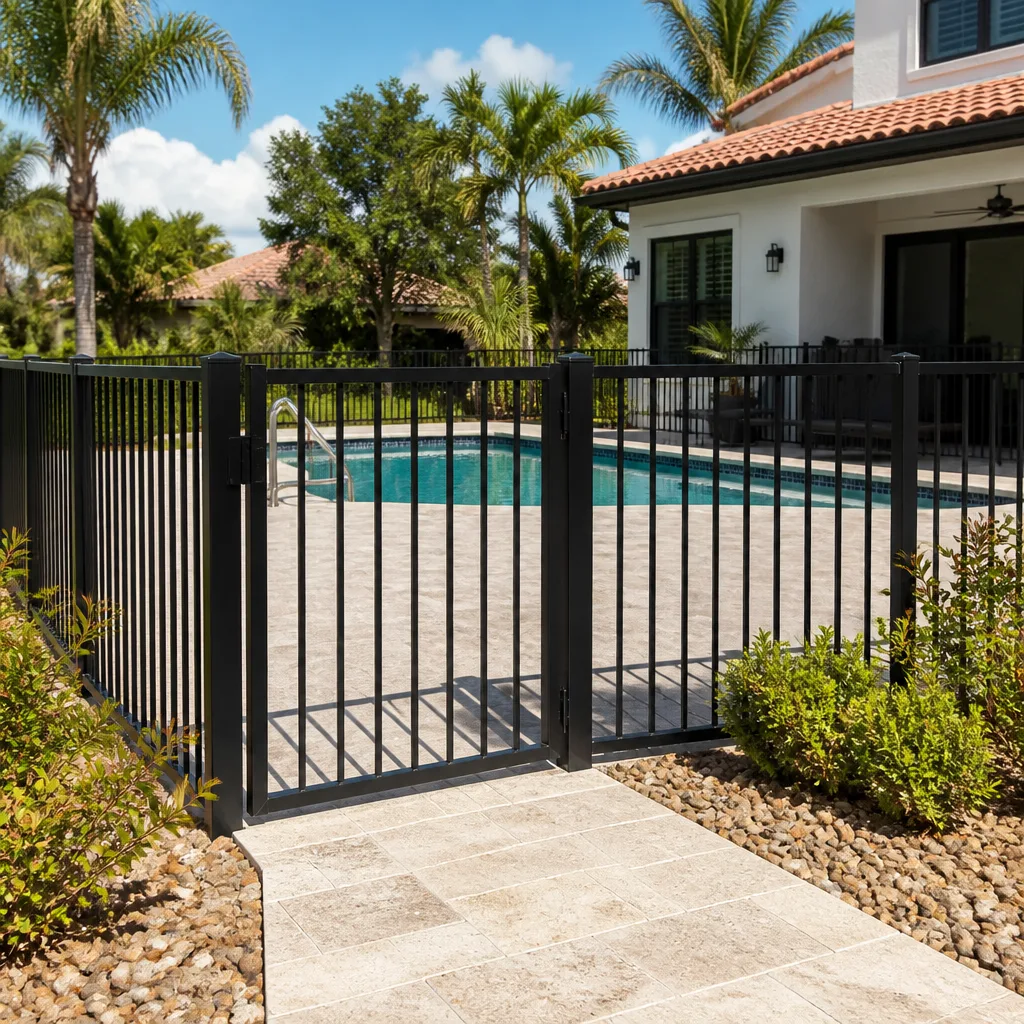
Aluminum Fence
- Monthly (light): Rinse with fresh water, especially within a few miles of the coast.
- Twice a year: Wash with mild soap, inspect for scratches and touch up the powder coating or paint. Check hardware for rust.
- Annually (May): Full structural inspection – posts, footings, brackets, gate hinges. This is the material that hides corrosion best, so it deserves the most attention.
Vinyl Fence
- Quarterly: Wash off mold, mildew, and algae with a mild soap solution and a soft brush. Vinyl is low-maintenance but not zero-maintenance in this climate.
- Twice a year: Check post caps and rails for cracks; check for loose panels.
- Annually (May): Full inspection, including post bases and the bottom rail, which are the first places to show stress.
Wood Fence
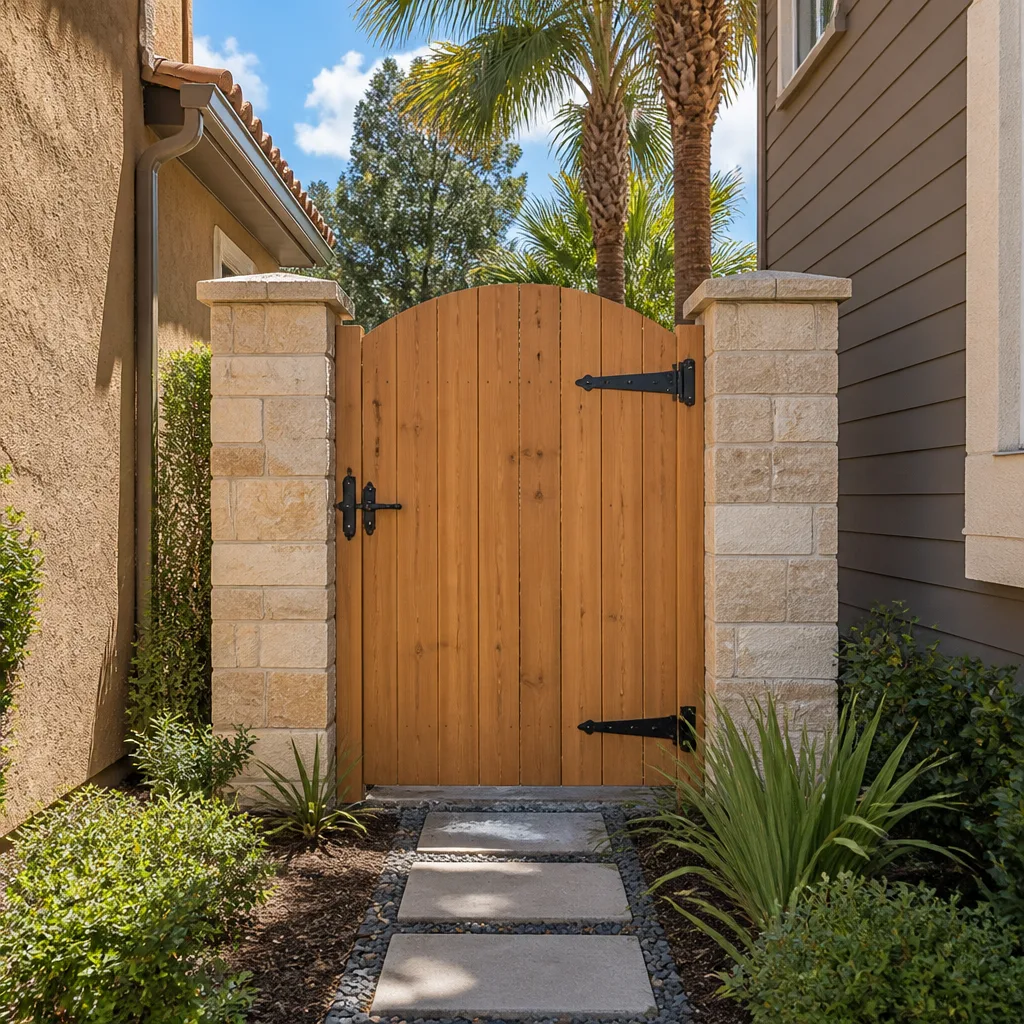
- Twice a year: Inspect for rot at the base, loose boards, and popped nails. Probe the posts with a screwdriver.
- Every 2-3 years: Clean and re-seal or re-stain. In South Florida’s sun and humidity, wood fences age faster than in most of the country, so don’t stretch the interval.
- Annually (May): Full inspection plus a check of board-to-rail fasteners and post footings.
Chain-Link Fence
- Twice a year: Check tension on the fabric, look for sagging, and inspect the coating for nicks and rust spots.
- Annually (May): Full inspection – posts, top rail, tension bars, gate hardware. Touch up any exposed metal to slow corrosion.
Spotting and Treating Early Corrosion Before It Reaches the Posts
Corrosion on an aluminum or steel fence almost never starts at the post. It starts at the small stuff – a screw head, a bracket, a scratch on a post cap – and works its way toward the load-bearing parts. Catching it early is the whole game in a salt-air climate like Homestead’s.
Here’s what to look for:
- White or chalky powder on aluminum, which is the metal telling you the coating has been breached.
- Bubbling or flaking paint around brackets and fasteners.
- Rust staining at screw heads and gate hinges – the classic starting point.
- Discoloration on the post where it meets concrete, which often signals moisture trapped at the base.
What to do when you find it:
- Clean the area with a soft brush and fresh water. Don’t scrub aggressively with anything abrasive – you’ll open more of the coating.
- Dry it fully. Corrosion treatment on a wet surface doesn’t hold.
- Touch up the finish with a matching paint or touch-up product, following the manufacturer’s guidance. Sealing the breach is what stops the spread.
- Replace heavily corroded fasteners and brackets. A rusted screw is cheap to swap; a corroded bracket that lets the rail work loose is not.
- Get a professional assessment if corrosion has reached a post base or footing. Once the load-bearing component is compromised, touching it up is like painting over a crack – it hides the problem, it doesn’t solve it.
In our experience, the fences that survive storm after storm in this part of Miami-Dade are the ones where somebody walked the run in May and caught the small stuff. The ones that fail are the ones where nobody looked until the wind made them look.
Cleaning Mold, Algae, and Salt Deposits Without Damaging the Coating
In a humid subtropical climate, mold and algae are a fact of life. The trick is removing them without stripping the finish that’s protecting your fence. Different materials need different treatment.
- Vinyl: A mild soap and water solution with a soft brush handles most mold and algae. For stubborn spots, a diluted white vinegar solution works well. Rinse thoroughly afterward. Avoid harsh bleach on colored vinyl – it can fade or streak the finish.
- Aluminum: Fresh water and mild soap, with a soft cloth or brush. Never use abrasive pads or steel wool, which scratch the coating and give salt a place to start. Rinse well to remove any soap residue that could hold moisture.
- Wood: A gentle cleaner appropriate for the finish, applied with a soft brush. Pressure washing can be tempting, but on wood it can raise the grain, crack the surface, and push water into the joints. If you use a pressure washer, keep it on the lowest setting and well back from the surface.
- Chain-link: A stiff brush and mild cleaner on the fabric, plus a rinse down after. Touch up any exposed metal where cleaning revealed a nick.
Salt deposits need special attention. In coastal parts of Homestead, airborne salt settles on every surface. A monthly fresh-water rinse during the dry season, more often during windy stretches, slows corrosion on metal parts considerably. It’s the cheapest maintenance task on this list and the one most homeowners skip.
What Annual Tasks Protect Your Manufacturer’s Warranty
Most fence manufacturers spell out maintenance requirements in the warranty, and most homeowners never read them until they need to make a claim. In a climate like South Florida’s, the tasks you skip are often the ones that give the manufacturer a reason to say no.
Here’s what tends to matter:
- Regular cleaning. Almost every manufacturer requires the fence to be cleaned periodically with mild soap and water. Mold and algae build-up that goes untreated can be read as neglect.
- Drainage and standing water. Warranties frequently exclude damage from poor drainage or water pooling at the base. Keep the ground around your fence graded so water moves away.
- Salt and chemical exposure. Coastal salt air is often handled in the warranty terms, but many require rinsing after exposure. Skip the rinse, and the corrosion may not be covered.
- Fastener and hardware checks. Loose or rusted hardware that leads to a failure can be pinned on lack of maintenance. Tightening and replacing as needed protects the claim.
- Proper repairs. Patching a problem with the wrong product – a steel screw in an aluminum fence, an unsealed scratch – can void coverage for the affected section. Use the manufacturer’s recommended parts and touch-up products.
The pattern here is simple: documented, routine maintenance is what keeps a warranty intact. Keep a short log of what you cleaned, when you sealed, and what hardware you replaced. If you ever need to make a claim, that record is your best evidence that you held up your end.
Common Mistakes to Avoid
- Skipping the pre-season inspection. The single biggest mistake we see in Homestead. A fence that looks fine in April can have a compromised post by September, and the storm will find it.
- Power-washing wood. It’s fast and it looks great for a week, but it drives water into the grain and joints, which is exactly what wood doesn’t want in a humid climate.
- Ignoring small corrosion. A little white powder on aluminum or a rusty screw head looks harmless. Left alone, it spreads toward the load-bearing parts.
- Using the wrong fasteners. Mixing steel screws into an aluminum fence invites galvanic corrosion. Coastal work needs stainless hardware.
- Letting vegetation grow against the fence. Vines and shrubs trap moisture and hide the damage until it’s structural. Trim back.
- Patching instead of fixing. Touching up a post-base problem on a leaning post is cosmetic. If the load path is compromised, patching just delays the real repair.
- Not documenting. Homeowners who keep dated photos and a maintenance log have an easy time with insurance and warranty claims. Everyone else doesn’t.
See the difference
 Before
 After
 Before
 After
 Before
 After
When to Call a Professional
Some tasks are DIY-appropriate: cleaning, trimming back vegetation, tightening a loose screw, replacing a worn gate latch. Others aren’t. Call a professional if you find a post that has shifted in its footing, a section that has pulled loose from the ground, structural corrosion that has reached a post base, or a gate post that has lost its rigidity. Those are load-path problems, and patching them yourself usually wastes money on a repair that won’t hold. Safety matters too: a leaning fence section under wind load can be genuinely dangerous to straighten by hand. If you’re in doubt, get it assessed before the next storm. Barrett & Sons Construction Homestead offers free estimates in Homestead – call (866) 344-6796. Our technicians have up to 28 years of experience, and every eligible job comes with permits pulled, inspections signed, and a written 90-Day Done Right Promise.
Frequently Asked Questions
Twice a year at minimum – a full inspection in May before hurricane season and a post-storm check after any named storm. In between, monthly fresh-water rinses during the dry season and quarterly mold and algae cleaning on vinyl and wood.
It depends on the material. Vinyl and aluminum handle a gentle pressure wash reasonably well, but wood does not – pressure washing raises the grain and drives water into the joints. For wood, use a soft brush and a gentle cleaner. For all materials, keep the pressure low and the nozzle well back from the surface.
Post-base failure – softened wood or undermined footings at the ground line. It’s hidden until the wind finds it. That’s why the May walk-push-probe inspection matters more than anything else on this schedule.
Fence permits depend on height, location, and lot lines, and Miami-Dade County rules are specific. We pull permits and get inspections signed on every eligible job, because permits protect you – the inspector works for you, not for the contractor. If someone tells you a permit is optional, look that up before you sign anything. You can also get a free second opinion on any written estimate from us.
Clean it on schedule, keep drainage away from the base, rinse off salt regularly, use the right hardware, and keep a short maintenance log. Documented, routine maintenance is what keeps a claim valid. The tasks you skip are the ones the manufacturer will point to.
When multiple posts or footings have failed, when structural corrosion has spread through the load-bearing parts, or when repairs would cost a large share of replacement. For a single damaged section, repair usually makes sense. For a fence with several compromised posts, replacement is often the better value. Call (866) 344-6796 for a free estimate – estimates are free and we’ll tell you honestly which way we’d go.
The Bottom Line
Fence maintenance in Homestead is a wind-survival routine, not a beauty routine. Walk the run in May, push and probe every post, tighten the hardware, and rinse off the salt. Clean each material on its own schedule, catch corrosion at the small fasteners before it reaches the posts, and keep a dated log so your warranty and insurance claims hold up. Most of this work takes an afternoon or two a year. Skip it, and the storm will show you what you missed – usually when it’s too late to do anything but replace. When you’re ready to plan, call our team at (866) 344-6796.
Written by the team at Barrett & Sons Construction Homestead.